#Overture by Vanessa Couchman @Vanessainfrance #BlogTour #BookPromo @rararesources


Overture

Overture

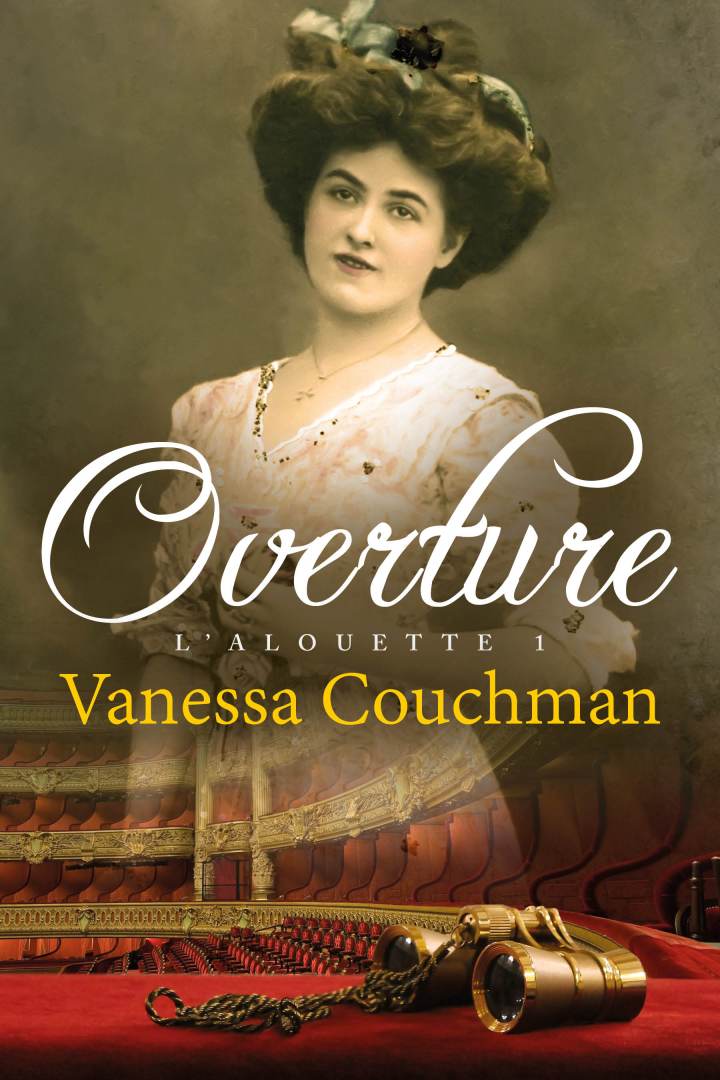
Overture Cover LARGE EBOOK

What if you had a unique talent, but everything conspired against your dreams?
France, 1897. Born to a modest farming family, Marie-Thérèse has a remarkable singing voice and wants to become a professional singer. But too many obstacles, including her parents’ opposition, stand in her way. And, through no fault of her own, she makes a dangerous enemy of the local landlord.
When the family circumstances change suddenly, Marie-Thérèse and her mother must move to Paris to work in her aunt’s restaurant. Her ambitions rekindle, but the road to success is paved with setbacks until a chance meeting gives her a precious opportunity.
She is close to achieving all her dreams, but the ghosts of the past come back to haunt her and threaten Marie-Thérèse’s life as well as her career.

Purchase Link
http://mybook.to/OvertureBook1

Author Bio –

Overture - Vanessa Couchman

Vanessa Couchman is a novelist, short story author and freelance writer and has lived in an 18th-century farmhouse in southwest France since 1997. French and Corsican history and culture provide great inspiration for her fiction. She has written two novels set on the Mediterranean island of Corsica: The House at Zaronza and The Corsican Widow. Her third novel, Overture, is Book 1 of a trilogy set in France between 1897 and 1945. Vanessa’s short stories have won and been placed in creative writing competitions and published in anthologies.

Social Media Links –

Website: https://vanessacouchmanwriter.com
Facebook: https://www.facebook.com/vanessacouchman.author/
Twitter: https://twitter.com/Vanessainfrance
Amazon Author Page: http://author.to/VanessaCouchman

Follow, like and share the book love with these awesome book bloggers…..

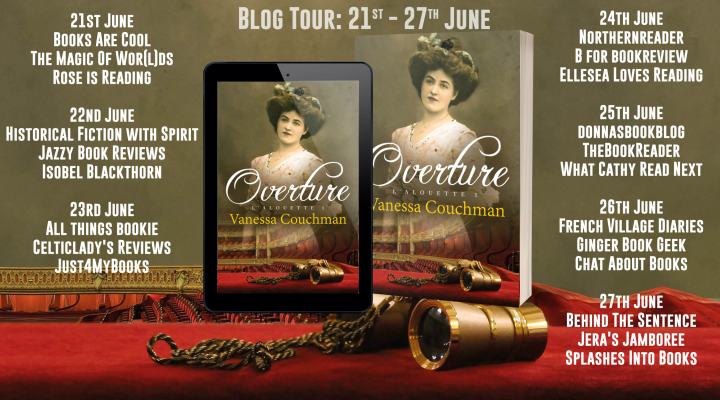
Overture Full Tour Banner

happy reading 🙂


#Transfer by Apple Gidley @ExpatApple #BlogTour #AuthorInterview #LoveBooksTours

Welcome to my stop on Apple Gidley’s Transfer blog tour with Love Books Tours 🙂

Transfer blog tour

Many thanks to Kelly @ Love Books Group Tours for arranging the following interview with Apple Gidley…..

Transfer author Apple_TL2 copy

For those who don’t know already, could you tell us about yourself and your book(s) please?

I am an Anglo-Australian living in the US. I have been a global nomad since the age of one month when I flew with my mother to Nigeria to join my father, and since then have lived in eleven other countries – as diverse as Papua New Guinea and The Netherlands. I’ve been fortunate to have had a number of interesting jobs – editor for a regional magazine for an international charity, working in a scuba shop selling dive equipment and trips around the world, British Honorary Consul to Equatorial Guinea to name a few.


My first book was a memoir – Expat Life Slice by Slice which tells of the ups and a few downs of living a peripatetic life. My first novel sits in a drawer – a wonderful learning experience that one day might see light, after significant reworking. My second novel, Fireburn, was taken on by OC Publishing, as was my third, Transfer – both historical novels set in the Danish West Indies.


Where did/do you get your ideas from?

Cultural curiosity is, I think, a byproduct of a global life. Add to that a love of history and the vagaries of human nature, and there are no end of possibilities for story lines. I am an inveterate eavesdropper – airports are a fantastic breeding ground for ideas.


Are any of your characters based (however loosely) on anyone you know?

I don’t think so. Characters, and characteristics, are more an amalgamation of many people I have known, or surreptitiously watched.


How do you pick your characters’ names?

From slave and census records in some cases. In others I trawl the internet for names appropriate to the eras in which a story is set.


Can you share your writing process with us, in a nutshell?

I tend to be a ‘pantser’ – though with each new book I write, I find I am becoming more disciplined with research notes, and outline. I have always written a short backstory for each major character and that has allowed them, and me, some latitude with plot.


Who are your top 5 favourite authors?

Only 5? In no particular order they are Pico Iyer, William Boyd, Tan Twan Eng, Joanna Trollope, and good old Jane Austen. And I’m just going to slip in a sixth, Maya Angelou.


If you could meet any author, who would it be and what would you ask them?

I’d be fascinated to meet Bruce Chatwin, probably because he too was a nomad fascinated by different customs and cultures. He seemed such an interesting and complicated man. I’d like to know why, when he had actually travelled the world meeting incredible people, he felt the need to not always stick to the facts when writing about places and events.


Were you a big reader as a child?

Yes. I drove my mother mad sometimes.


When did you start to write?

I dabbled with short stories for years, and a lot of my jobs involved writing of some kind. About ten years ago I took the real plunge and started writing travel articles and submitted short stories to anthologies, but that was only after my husband suggested I stop talking about it and actually start writing.


If you could re-write the ending to any book what would it be and what would you change?

Is there a book you wish you had written?

I don’t think I could. Every author knows how they want to end a book, even if it doesn’t always satisfy the reader. I’ve just finished reading Kate Quinn’s The Huntress, and I was desperately hoping a sticky ending would be in store for the title character but….

No book I wish I’d written, but I would love to be as accomplished a writer as any of my top six!


If you wrote an autobiography, what would your title be? 

I have, and it’s called Expat Life Slice by Slice.


If you could invite any fictional character for coffee who would it be and where would you take them?

Yun Ling is one of the central characters in Tan Twan Eng’s novel The Garden of Evening Mists. Even though she was a tea drinker I’d take her to my favourite coffee shop in Houston, Texas – Catalina’s – and I’d ask her how, after her entire family perished in a prisoner-of-war camp and her desperate hatred of all things Japanese, could she take a Japanese lover?


What are you working on right now?

An historical novel set in 1950s Malaya during a time euphemistically called ‘the Emergency’ when a communist uprising threatened to destabilise not just the country but the region. It is a love story for both a country and a woman.


Tell us about your last release?

Transfer, the sequel to Fireburn, was released on March 31st, 2019 to coincide with the date of transfer from the Danish West Indies to the United States in 1917. Transfer continues the lives of those at a sugar plantation called Anna’s Fancy on the island of Saint Croix in the late 1800s. In it Niels, the bastard son of a Danish landowner and his black mistress, is grown up and experiences life as a black man in Europe before returning to the Caribbean to help shape  the transfer of power to America.


Do you have a new release due?

Not yet. The manuscript for the Malay book is in its early stages.


What do you generally do to celebrate on publication day?

Drink champagne, thank my lucky stars I am doing something I love, and surround myself with people who have supported me through both the agonies and joys of writing.


How can readers keep in touch with you?

Through my website – www.applegidley.com If someone can be bothered to write to me, I always, always respond. Twitter @expatapple


Is there anything else you would like us to know?

I have a cat rescued from the Boardwalk in Christiansted on St Croix when she was about to be kicked into the sea, and a dog from a rubbish dump in Trinidad. Together Bonnie and Clyde create chaos in my life, but are dearly loved and in strange ways help me write. Plot problems are resolved when walking Clyde, and Bonnie provides stress relief as she stretches across my keyboard!


Thank you for taking the time to answer my questions, Apple 🙂

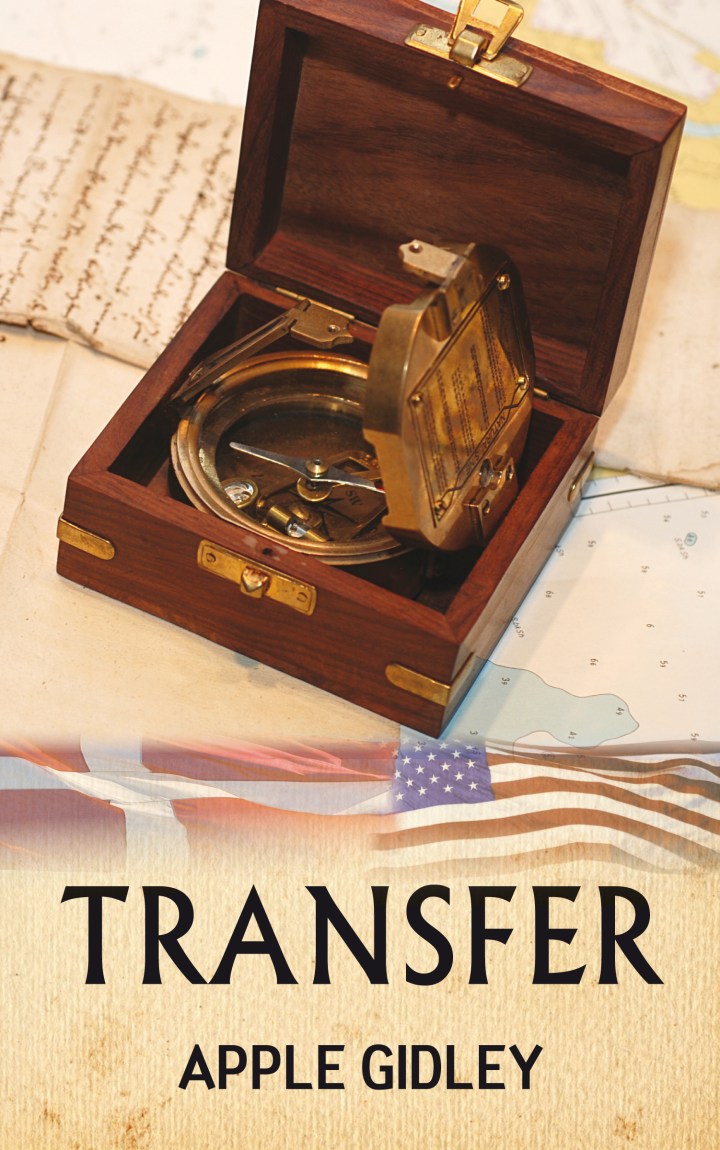
9781999015602-Perfect.indd

Blurb

Transfer traces the lives of those on Anna’s Fancy, the Clausen estate on Saint Croix in the Danish West Indies, handed down through three generations. An historical novel and the sequel to Fireburn (OC Publishing 2017), Transfer sees Niels Clausen, the illegitimate child of a Danish landowner and his black mistress who both died as a result of the 1878 worker revolt, leave his adoptive mother’s sugar plantation and sail to England to continue his education.

 With the help of Toby, a British aristocrat, Ivy, a lady’s maid turned lady and her botanist husband, Timothy, Niels challenges the perceptions on the streets of London of a black man at the turn of the 20th century. His development as a writer and political protagonist continues as he travels to Denmark and France where he meets up with childhood friends, Javier and Fabiana Gomez, before returning to Saint Croix.

The Danish West Indies face an uncertain future as the declining sugar industry lessens Denmark’s interest in their colonial outpost. Niels becomes increasingly involved in the future of the islands as war looms and concerns grow that Germany might covet a presence in the Caribbean. Will the islands’ security be guaranteed by the transfer of power to America?

The highs and lows of Niels’ life are punctuated by the crossing of oceans and cultures as well as the political manoeuvrings of a turbulent time in Europe, the United States and the Caribbean.

Biography

Apple Gidley, an Anglo-Australian author, whose life has been spent absorbing countries and cultures, considers herself a global nomad. She currently divides her time between Houston, Texas and St Croix, in the US Virgin Islands.

She has moved 26 times, and has called twelve countries home (Nigeria, England, Malaysia, Singapore, Australia, Papua New Guinea, The Netherlands, Trinidad and Tobago, Thailand, Scotland, USA, Equatorial Guinea), and her experiences are described in her first book, Expat Life Slice by Slice (Summertime 2012).

Her roles have been varied – from magazine editor to intercultural trainer, from interior designer to Her Britannic Majesty’s Honorary Consul. Now writing full time, Apple evocatively portrays peoples and places with empathy and humour, whether writing travel articles, blogs, short stories or full-length fiction.

Her first novel, Fireburn, set in the Danish West Indies of the 1870s, will be launched on October 1st, 2017 (OC Publishing).


Buy Link

https://amzn.to/2Ma0pkD

happy reading 🙂


A Fantasy Writers’ Handbook by Richie Billing @Magpie_Richie #Spotlight #BookPromo

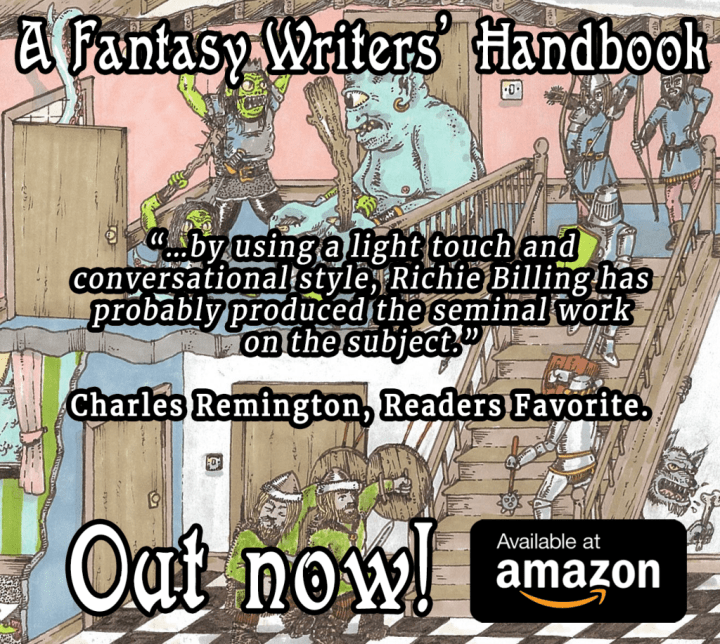
A Fantasy Writers Handbook out-now-with-quote

I have something a little bit different for you today, something that may be of interest to those of you who fancy having a go at writing fantasy…..

Fantasy Writers' Handbook, A - Richie Billing

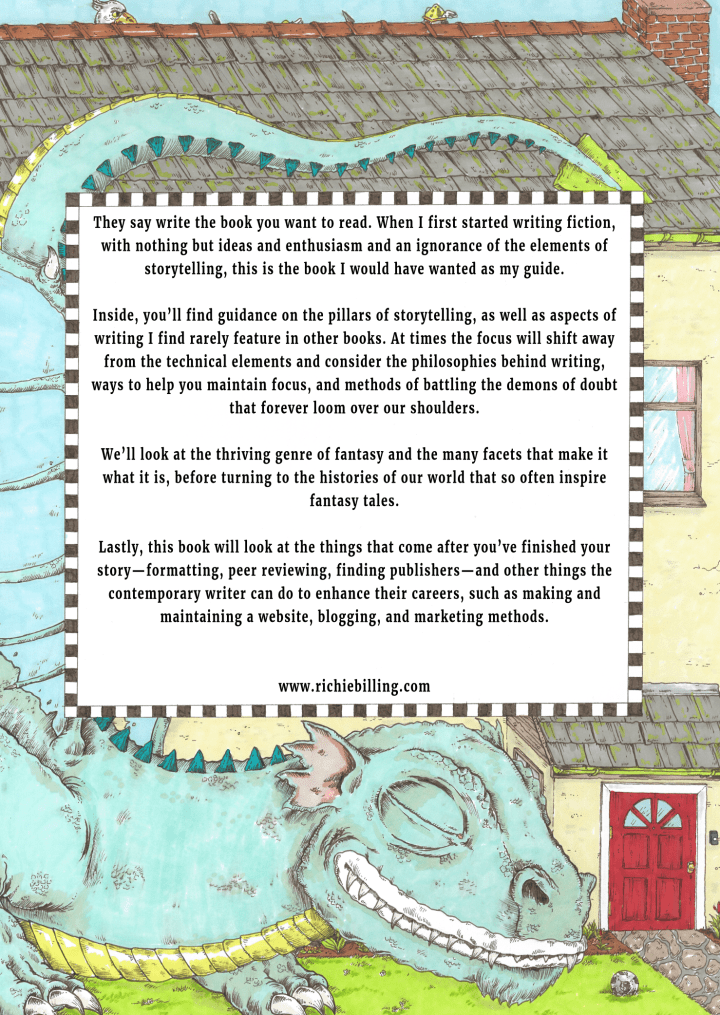
A Fantasy Writers Handbook back-cover-1

They say write the book you want to read. When I first started writing fiction, with nothing but ideas and enthusiasm and an ignorance of the elements of storytelling, this is the book I would have wanted as my guide.

Over the years I’ve spent countless hours studying the craft of writing and practising and honing that craft. I’ve learned many lessons, often in the harshest of ways, and the product of those lessons is this book: a guide to everything I’ve learned about writing, the fantasy genre, and the things that come when the writing is finished, if indeed it ever is.

The aim is to save you the long hours I’ve spent trawling through textbooks, sitting through lectures, seminars, workshops and scouring the web for every useful little morsel that can be found. It’s by no means a complete guide, but it’ll set you on the right path.

In the pages that follow you’ll find guidance on aspects of writing I find rarely feature in other books, and at times the focus will shift away from the technical elements and consider the philosophies behind writing, ways to help you maintain focus, and methods of battling the demons of doubt that forever loom over our shoulders.

We’ll look at the thriving genre of fantasy, the many facets that make it what it is, before turning to the histories of our world that so often inspire fantasy tales.

Lastly, this book will look at the things that come after you’ve finished your story—formatting, peer reviewing, finding publishers—and other things the contemporary writer can do to enhance their careers, such as making and maintaining a website, blogging, and promoting your work.

By the end, you’ll have a sound foundation upon which to build and the tools to venture out alone with courage and confidence. To help you reach that point, all you need is a commitment to work hard and the determination to overcome the challenges ahead.

***

Why not sample before buying? Check out a few chapters by clicking the links below…

Click here to read ‘The Wheels of Change’

***

Click here to read ‘Dialogue’

***

Click here to read ‘Blogging’


Reviews…..

“I found myself binge reading A Fantasy Writer’s Handbook in the same way I would a great thriller. Written in a friendly, uncluttered style, Richard Billing has managed to accumulate and present a huge amount of useful information in a way that perhaps a favourite lecturer might do.” Charles Remington, Readers Favorite

“What a fantastic read! I thoroughly enjoyed this book, it’s really well structured, informative and engaging and for those who enjoy writing and want to hone the craft it’s an incredible tool to have in your arsenal, full of techniques and theories to help inform your writing. Enjoyed the fascinating addition of the surveys in discussing the opinions of writers in terms of “the rules”. Some real gems of insight and lots of humour along the way. A fun guide and a good time!Emma Bolland

There’s so much insight into writing fantasy contained within these pages. I’ve been a follower of Billing’s blog for a while now because his articles have impressed me time and again, and his book is just how I hoped–full of gems and his signature humour.” Sara

The sections are well thought out, research is explained, shared and credited and overall is written in a way that is straightforward and makes sense. Whilst reading I have made notes to apply to my own work in progress and will be referring to this handbook many times in the future. Having been fortunate enough to be provided with an advance copy in exchange for a review, I will definitely be ordering a hard copy to have on my bookshelf for instant referral. I would encourage all aspiring writers to do the same.” Chris

“Richie Billing has found a way to communicate a vast amount of information in a way that is easy to understand.” — Eric Wirsing.

Check out more reviews on Goodreads.


A Fantasy Writers’ Handbook is available in eBook in the vast majority of countries worldwide (see Amazon), and in paperback in the countries listed below—the links also work for buying the eBook. If you can’t buy the book in your territory, please email me.

Amazon.com

Amazon.co.uk

Amazon.ca

Amazon.de

Amazon.fr

Amazon.es

Amazon.it


happy reading & writing 🙂


31 Days Of Wonder by #TomWinter @CorsairBooks @LittleBrownUK #BookReview #Netgalley

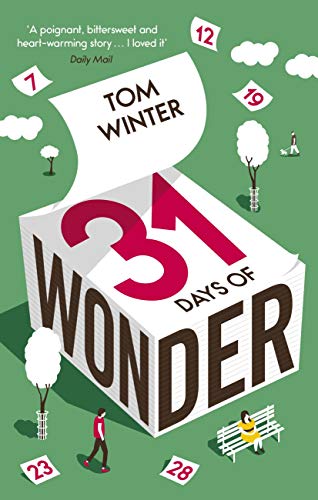
31 Days Of Wonder

First of all, my apologies to the author and publisher for taking so long to read this. It has been on my Netgalley list for far too long, but I am so glad I finally got the chance to read it as I have really enjoyed it.
Ben is by far my most favourite character. He is so lovely and really made me giggle at times with how so straight to the point he is. It was so lovely how his total honesty leads to such a change in another person’s life. Someone he had never met before and may never meet again. This someone is Alice, who seems to spend her life surrounded by awful people (her mother included) who seem fixated on the fact that she’s overweight, rather than who she is as a person. It’s no wonder she gets so low. She does also have her funny moments too though. I did laugh out loud on more than one occasion.
People really can be horrible at times and some of the characters in this book are quite unbelievably insensitive. They are not people I would want to associate with. I did like her Dad though.
Anyway, when Alice meets Ben in the park he tells her straight out that he thinks she’s beautiful. Naturally this makes her day, but she needs to accept this for herself and truly start to believe it.
Ben is also trying to find his place in the world and I really enjoyed his story. We need more Bens in this world.
As they say, be kind always as we never know what someone might be going through in their lives. The chance meeting between Ben and Alice changes both of their lives, for the better, forever.
A heart-warming and sometimes funny tale with a powerful message.
I very much recommend.
Many thanks for my review copy.

Via AmazonUK…..

‘And in that instant, he knows in his heart that today is a momentous day; come what may, he and Alice will meet again, and life will never be the same.’

Alice is stuck in an internship she loathes and a body she is forever trying to change.

Ben, also in his early twenties, is still trying to find his place in the world.

By chance they meet one day in a London park.

Day 1
Ben spots Alice sitting on a bench and feels compelled to speak to her. To his surprise, their connection is instant. But before numbers are exchanged, Alice is whisked off by her demanding boss.

20 minutes later
Alone in her office toilets, Alice looks at herself in the mirror and desperately searches for the beauty Ben could see in her.

Meanwhile, having misunderstood a parting remark, Ben is already planning a trip to Glasgow where he believes Alice lives, not realising that they actually live barely ten miles apart.

Over the next 31 days, Alice and Ben will discover that even if they never manage to find each other again, they have sparked a change in each other that will last a lifetime. In 31 Days of Wonder, Tom Winter shows us the magic of chance encounters and how one brief moment on a Thursday afternoon can change the rest of your life.

About the author…..

Tom Winter’s debut novel, Lost & Found, was published in five languages. In August 2013 it was chosen as the Book of the Month by the Mail on Sunday’s You Magazine book club. That summer, the Kindle edition was also a No. 1 bestseller on Amazon UK. In Germany, Apple iBooks called it one of the ten books that everyone should read over the holidays.

Tom’s second book, Arms Wide Open, was published in 2014. Hello! magazine called it ‘a bittersweet joy of a book’, while Saga magazine said it is ‘utterly compelling… Winter has a lethal eye for family tensions.’

The hardback edition of his third novel, 31 Days of Wonder, was released in August 2017. Hello! magazine called it ‘A wonderful read’, and Cosmo magazine remarked ‘Read when you’re in need of comfort. This is the bookish equivalent of eating a doughnut.’ The Daily Mail said ‘A poignant, bittersweet and heart-warming story… I loved it.’ The paperback edition will be released in summer 2018.

happy reading 🙂

#AuthorInterview with Vanessa Westermann @VanessasPicks #AnExcuseForMurder

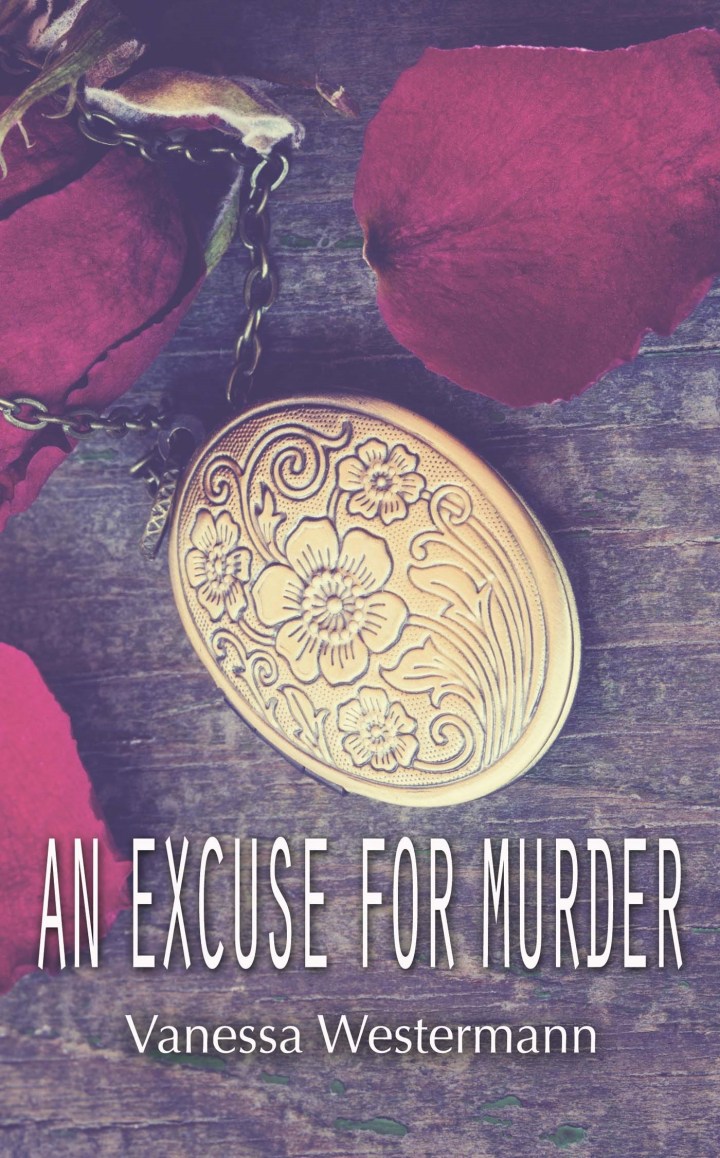
An Excuse For Murder

Today I have the pleasure of welcoming Vanessa Westermann to Chat About Books 🙂

Vanessa Westerman

For those who don’t know already, could you tell us about yourself and your book please?

I’m half-Canadian, half-German. I was born and raised in Germany, but currently live in Canada, in a cottage by a lake. I’m a former Arthur Ellis Awards judge, and have given a talk on the evolution of women’s crime writing, at the Toronto Chapter of Sisters in Crime. I’m sure you can’t tell, but I love reading a good mystery!

My debut crime novel, An Excuse For Murder, was published by The Wild Rose Press in March. As a former bodyguard, it should be easy for Gary Fenris to kill, especially when the motive is revenge. But when bookstore owner Kate finds the body, her sleuthing takes them down a trail of blackmail, obsession and death…

Where did/do you get your ideas from?

Art, books and conversations inspire me. I keep a notebook filled with ideas, pictures and fragments of overheard dialogue.

Are any of your characters based (however loosely) on anyone you know?

I can’t say that any one character is directly based on someone I know, but there are certainly aspects that have been inspired by conversations, mannerisms or personality traits.

How do you pick your characters’ names?

I drew inspiration from mythology for Gary Fenris’s name. Fenrir is a monstrous wolf in Norse mythology. Knowing that only evil could be expected of him, the gods bound the wolf with chains. Some stories say that, on Ragnarök, he will break loose and fall upon the gods, taking his revenge. I love it when a name has an additional meaning, something that connects with the character’s personality or story.

Can you share your writing process with us, in a nutshell?

I get my best work done in the morning. So I start early, with a very large cup of tea. I listen to music as I write, and try to choose music that suit either the tone or the character.

I also edit relentlessly. I normally start with a general idea of what I want to have happen in a chapter, and “sketch” a rough draft – just getting ideas down on paper. Then I refine the writing, going back to add depth and dimension to the scene.

Who are your top 5 favourite authors?

Jasper Fforde, Louise Penny, Tana French, Benjamin Black, and Susanna Kearsley.

If you could meet any author, who would it be and what would you ask them?

Ngaio Marsh, because I would want to find out more about her work with the theatre and ask her about what it was like to write crime fiction during the Golden Age.

Were you a big reader as a child?

Yes. If I could have, I would have spent all my time reading. Anne of Green Gables, the Hearts and Dreams series by Cameron Dokey, Nancy Drew mysteries…

When did you start to write?

I’ve always loved reading and writing. Even before I could spell, I would fill in the words I couldn’t sound out with pictures.

Is there a book you wish you had written?

I wish I had written China Trade by S.J. Rozan. Those characters! The food, the dialogue…

If you wrote an autobiography, what would your title be?

“Between The Pages”

If you could invite any fictional character for coffee who would it be and where would you take them?

Ever since I read Jasper Fforde’s Something Rotten, I’ve wanted to invite Hamlet for a coffee at Starbucks. “To latté or not to latté, that is the question…”

What are you working on right now?

I’m currently working on a stand-alone crime novel that features another strong female protagonist as sleuth, a chocolate shop and a dark secret in the past. But I’m also drafting some ideas for a sequel to Kate and Gary’s story.

Tell us about your last release?

An Excuse For Murder combines elements of the cozy mystery, thriller and romantic suspense. The story is told from two points of view: from the perspective of Gary Fenris, a haunted former bodyguard who commits murder and then has to live with the crime, and from the point of view of Kate Rowan, a bookstore owner who discovers the body. I was thrilled to receive advanced praise for the book from Carolyn G. Hart, Barbara Fradkin, M.H. Callway and Rosemary McCracken – all wonderful female crime writers who I’ve long admired.

What do you generally do to celebrate on publication day?

On publication day, I went out for a gin and tonic with friends and family – it’s lovely to celebrate with the people who supported me through the process and cheered me on.

How can readers keep in touch with you?

Readers can find me on Twitter: @VanessasPicks.

I also write a blog that features reviews, book recommendations and interviews with fellow crime writers. I’ve been lucky enough to interview Jasper Fforde, Vicki Delany and Shelley Freydont, amongst others.

I love hearing from readers. So, if you’ve read An Excuse For Murder, do get in touch and let me know what you thought!
Website & Blog | Twitter

Thank you for taking the time to answer my questions, Vanessa 🙂
Thank you so much for having me on your blog!

Book Blurb:

As a former bodyguard, it should be easy for Gary Fenris to kill, especially when the motive is revenge. But Gary has made two mistakes in his life. The first was letting the woman he loved die on his watch. The second was thinking vengeance could bring him peace.

Local bookstore owner and amateur lock pick Kate Rowan loves nothing more than a good mystery. Her curiosity soon leads her down a trail of blackmail, obsession and death. Despite the risk – or maybe because of it – Gary finds himself drawn to Kate. When danger strikes, Gary is forced to face the fact that he used love as an excuse for murder. And he’s got one last score to settle.

happy reading 🙂


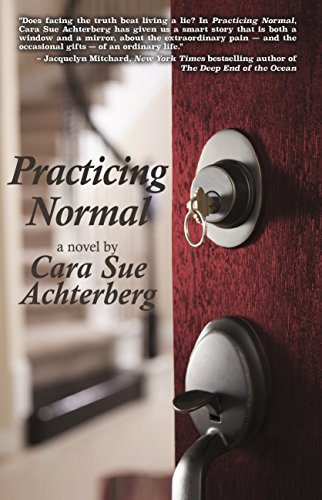
Practicing Normal by Cara Sue Achterberg @CaraAchterberg #BookReview #Netgalley

Practicing Normal

Practicing Normal is a captivating family saga. Each chapter is written from the perspective of a different character and I always tend to enjoy this format. It works really well with this story. We meet Kate who is the mother of Jenna and JT, wife to Everett and daughter to Marilyn. She is a housewife/stay-at-home mother who sacrificed her nursing career to be there for her family. She is an instantly likeable character and very relatable to many, I would imagine. She’s a busy housewife coping with a stroppy teenager, a son with Aspergers, a depressed, dependant, aging mother and a cheating husband! She also has an annoying sister, Evelyn, who I didn’t warm to at all. Kate deserves much more than to be treated as a glorified skivvy with little to no respect from certain members of her family who should cherish her more.

Everett is a cheating git who wants his cake and eat it. Why are some men never satisfied with what they have??

Jenna is moody teenager, to put it mildly! She is fully aware of what her father is up to though so I could empathise with her to a degree. She hates him and feels that her mother is weak for putting up with him. She becomes much more likeable as the story progresses. She develops a relationship with local boy, Wells, and becomes more relaxed and happy.

JT is a brilliant character! Loved him!

Marilyn is a difficult character to like initially, but easier to understand as the story progresses. Her story is quite heart-breaking.

These are real people with real problems and this story is full of raw emotion, but also hope for a brighter future.

I highly recommend.

Many thanks for my review copy via Netgalley.

happy reading 🙂


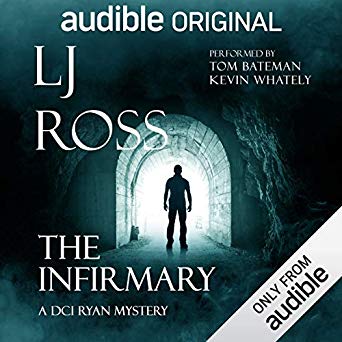
The Infirmary: A DCI Ryan Mystery (Multicast Drama): An Audible Original Drama by L J Ross @LJRoss_author #BookReview @audibleuk

The Infirmary audible drama

I have absolutely LOVED the Audible Original Drama version of The Infirmary!

This is book eleven in the DCI Ryan series, but is a prequel. It works really well at this point in the series having read all of the previous ten books, and loved them all, but I’m sure it will be enjoyed by anyone new to the series by way of introduction to the characters.

I’m sure I would have loved the Kindle version also, but listening to it with all of the character’s having their own voice made it really come to life. It was like listening to a TV crime drama. Each voice suited the character perfectly, in my opinion, especially Phillips! He sounds exactly as I had imagined him to and he really does make me giggle at times. Ryan sounds as suave and authoritative as expected. I was totally immersed in their world for a few wonderfully entertaining hours. I listened right to the end last night and only then did I notice the time and realise that I had to be up for work this morning!

Being a prequel, the story itself naturally takes us back to before Holy Island and how Ryan comes to be there after the death of his sister. It isn’t an easy read/listen as there are some quite graphic descriptions of the murders committed, as in the rest of the series, and I have to say that the voice of the murderer when taunting his victims is really, really creepy!

Brilliantly written, as always with L J Ross. I can’t wait to read The Moor.

Via AmazonUK…..

Introducing a new multicast drama by LJ Ross, the author of the international number one best-selling series, the DCI Ryan mysteries.

There’s a serial killer targeting the streets of Newcastle, seemingly picking his victims at random but subjecting them all to the same torturous end. When the Chief Inspector on the case goes missing, it falls on DCI Ryan to track down the man who is brutally murdering women and goading the police to ‘catch me if you can’.

As everyone becomes a suspect, Ryan and his team get drawn further and further into the case, but for Ryan the nightmare gets closer to home than he could ever have imagined.

This Audible Original drama stars Tom Bateman (Murder on the Orient Express, Jekyll & Hyde, Snatched), Bertie Carvel (Doctor Foster, Les Misérables), Hermione Norris (Spooks, Cold Feet) and Kevin Whately (Lewis, Auf Wiedersehen, Pet) and is a prequel to the DCI Ryan series.

Starring: Alun Armstrong, Rachel Atkins, Tom Bateman, Mark Bazeley, Anna Bolton, Bertie Carvel, Stephen Critchlow, Vicki Davids, Reece Dinsdale, Harriet Ghost, Frances Jeater, Jack Lloyd, Dean Logan, Daniel Matthew Lemon, Roger May, Hermione Norris, Kate Okello, Colleen Prendergast, Shaun Prendergast, Nicholas Rowe, David Seddon, Marlene Sidaway, Tom Slatter, Fiona Victory, Lauren Waine, Kevin Whately and Hannah Wood

About the author…..

Louise Ross

LJ Ross is the author of the #1 international bestselling series of DCI Ryan mystery novels and her books have sold more than 4 million copies since 2015. She has released 12 full-length novels, nine of which have reached number one in the Amazon UK Kindle best-sellers chart. They are available to purchase in e-book, print and audiobook narration on the Amazon store.

Her eleventh novel, ‘The Infirmary’, is a prequel story which is also available as a major Audible Originals drama starring Tom Bateman, Kevin Whately, Hermione Norris and Alun Armstrong.

Her twelfth novel, ‘The Moor’, was released in ebook and paperback on 27.04.19, and will be available as an audiobook shortly.

Louise was born in Northumberland, England. She studied undergraduate and postgraduate degrees in Law at King’s College London and studied abroad in Paris and Florence. She spent much of her working life in London, where she was a regulatory lawyer for a number of years before taking the decision to change career and pursue her dream to write.

Now, she writes full time and lives with her husband and son in Northumberland. She enjoys reading all manner of books, travelling and spending time with family and friends.

If you would like to connect with LJ Ross, she would be very happy to hear from you:

https://www.facebook.com/LJRossAuthor

http://www.ljrossauthor.com
http://www.lovesuspense.com
lj_ross@outlook.com

happy reading/listening 🙂


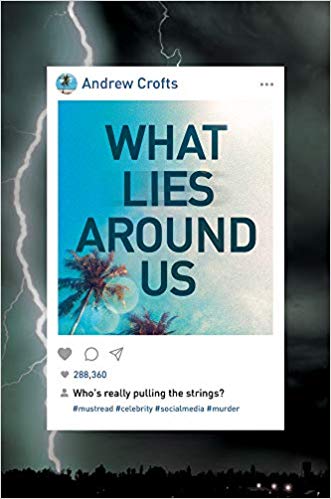
What Lies Around Us by Andrew Crofts @RedDoorBooks #BookReview

What Lies Around Us cover

What Lies Around Us is quite an intriguing and shocking tale.

A British ghostwriter, Andrew, is offered a million dollars to write the autobiography of one of Hollywood’s biggest stars. The one offering the million dollars though is a powerful billionaire, with seemingly no real incentive to want this book written. Why is he so keen for it to be a success?

When Andrew is flown out to America to interview for the book, he gets more than he bargained for and the story cranks up a notch when he’s caught up in a school shooting. He finds himself becoming closer to his subject, that is until his wife, Caroline (who works in publishing), is flown out to work alongside him on the project.

This books starts out as a seemingly simple story of a ghostwriter’s stroke of luck, hitting the jackpot with a million dollar offer too good to refuse, especially as the subject is one of his celebrity crushes. It soon turns darker though as secrets are revealed and Andrew realises there is far more to this story than meets the eye.

Many thanks to Anna @ RedDoor for my review copy.

Via AmazonUK…..

It is possible that since this book’s publication you will have heard that I have died in “suspicious circumstances”. Obviously I hope that will not be the case, but I believe it is worth taking the risk in order to get this story out there.

Why would one of Silicon Valley’s most powerful billionaires offer a British ghostwriter a million dollars to write the autobiography of Hollywood’s biggest star?

Only once he is living and working among the world’s richest and most beautiful people does the ghost realise that there is way more than a publishing deal at stake.

The ghostwriter must face the dark underbelly of the tech industry. He must face corruption and manipulation, come to blows with people who will do anything to remain at the top of their game and uncover the dark truth behind what it really means to be an ‘influencer’ . . .

What Lies Around Us takes the reader into a world of myth-makers and power-brokers and reveals who is really running the world. Who is telling the stories and controlling the way we all think with a mixture of old media, social media and fake media?

About the author…..

Andrew Crofts is a ghostwriter and author who has published more than eighty books, a dozen of which were Sunday Times number one bestsellers. He has also guided a number of international clients successfully through the minefield of independent publishing.

Andrew’s name first became known amongst publishers for the stories he brought them by the otherwise disenfranchised. Travelling all over the world he worked with victims of enforced marriages in North Africa and the Middle East, sex workers in the Far East, orphans in war-torn areas like Croatia and dictatorships like Romania, victims of crimes and abused children everywhere. He also worked with members of the criminal fraternity.

The enormous success of these books brought many very different people to his door; first came the celebrities from the worlds of film, music, television and sport, and then the real elite in the form of world leaders and the mysterious, powerful people who finance them, arm them and, in some cases, control them.

As well as using traditional publishers to reach readers he has also experimented with e-books, publishing, “Secrets of the Italian Gardener”, a novella which draws on his experience amongst the powerful and wealthy, and “The Fabulous Dreams of Maggie de Beer”,(a prequel to his traditionally published “The Overnight Fame of Steffi McBride”, now filmed and appearing in episodes on YouTube’s This is Drama channel).

His books on writing include “Ghostwriting”, (A&C Black) and “The Freelance Writer’s Handbook”, (Piatkus), which has been reprinted eight times over twenty years.

Throughout his bestseller, “The Ghost”, Robert Harris quotes Andrew’s seminal book, “Ghostwriting”. Harris’s book went on to become a major movie by the same name, directed by Roman Polanski and starring Ewan McGregor as the eponymous ghost. The opening lines in Robert Harris’s book sum up Andrew’s philosophy:

“Of all the advantages ghosting offers, one of the greatest must be the opportunity that you get to meet people of interest”.

happy reading 🙂


#MonopoliBlues #BlogTour #Extract @unbounders #RandomThingsTours

Welcome to my stop on the Monopoli Blues Blog Tour! 

I’ve just noticed that I’m not actually on the poster but, never mind, I still have the excellent first chapter to share with you all.
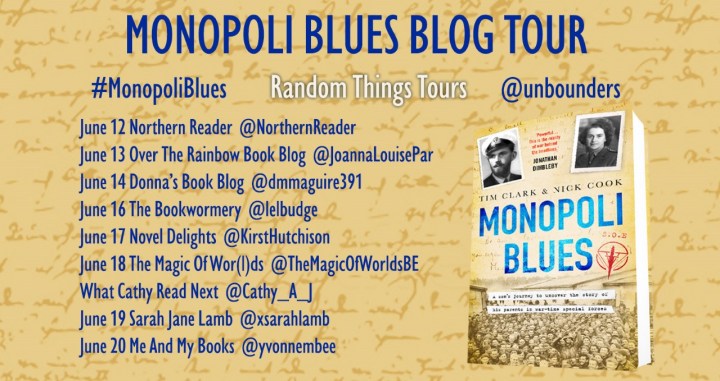
Monopoli Blues BT Poster

Enjoy!

Chapter 1

‘Ero qui durante la guerra’ Guildford, England, 1960 In 1960, when I was nine, my parents moved to a largish house close to Guildford. Just outside the spare room at the top of the stairs was a big old cupboard. One day, I was rummaging through it when I came across Pop’s naval uniform. The thing that grabbed my attention was the parachute badge sewn on to the sleeve. In all my reading on the war–and, being of the generation that had grown up in its immediate aftermath, I’d read a lot – I’d never come across a naval parachutist before. Why did Pop have a parachute on his uniform? Could it be possible that there had been more to his wartime service in the Royal Navy, as I thought of it then (he had actually been in the Royal Navy Volunteer Reserve, the RNVR), than he had been letting on? When I asked him about it, he said he’d done some parachuting, but had dismissed it with a wave of the hand – telling me that parachuting itself had been no more frightening than jumping off a 12-foot wall. This, however, coupled with a training manual tucked amongst a pile of vintage Second World War National Geographic magazines I’d found under a bed in my grandparents’ house round about the same time – it had contained a set of instructions on how to  make bombs as well as stripping and reassembly notes for a Brengun – hinted that my father’s wartime career had been more interesting than he’d been letting on. A year or two after this, we went on holiday to France. One day, to give us a break from the beach, Mop and Pop took us to visit the port at St Nazaire–the place where, in 1942, HMS Campbeltown, her bow packed full of explosives, had rammed and destroyed a dock used for repairing German battleships. The St Nazaire raid had been legendary, one of the most daring of the entire war, and it had struck me as curious that Pop had known quite so much about it. My naïve view of the way the Navy waged war had been supplanted by a more 23
mature appreciation of combined land–sea operations, the St Nazaire raid being a prime example of the way in which the roles of sailors, commandos and soldiers had blurred when the need arose – usually when there was a requirement to hit the enemy via unconventional warfare. But I still wasn’t able to equate ‘being in the Navy’ with doing anything subversive. So, the plot thickened when, that same holiday, Pop took us to see a memorial to French Resistance fighters in the Loire Valley. He had clearly been moved by it, but had said nothing. It was only the following year, on our next holiday, driving around Puglia in Southern Italy, that the penny finally dropped. We arrived at a fishing port called Monopoli, where, out of the blue, my parents announced they’d met each other. ‘Ero qui durante la guerra,’ Mop would tell any local she came across in her broken Italian. I was here during the war. I learned, from other asides, she’d been a wireless operator/coder. But neither she nor Pop ever divulged the essential point: that the reason they’d been in Monopoli was because it had been the operational HQ of the Special Operations Executive in Italy from 1943 to 1945. In the mid-1960s, SOE was barely on anyone’s radar, because 20 years after the war most of its operations remained highly secret. Bits and bobs had come out in books like The White Rabbit by Tommy Yeo-Thomas, which I’d read avidly, but it was only when I was at university, and I got hold of Professor M.R.D. Foot’s seminal history of the SOE in France, which had recently been published, that I appreciated how big Special Operations Executive had been and what it had done. In Pop’s case, it had clearly involved guns, because shortly after our Italian holiday my brother, Will, and I had found his weapon: a Beretta automatic, complete with its magazine and ammunition. Even though it couldn’t fire, we’d played with it, mouldy green bullets and all, until one day, during one of those amnesties that used to get held every so often, a policeman turned up to ask if Pop had any old weapons he wanted to hand in.
My father’s best friend had been a man called Tommy Walmsley.
Tommy, big, kind and always on hand with an amusing story, had been Pop’s drinking buddy for many years in a touching weekly tradition they never, ever broke. Tommy had been in the Lancashire Fusiliers and described his greatest military achievement as saving the regimental wine at Dunkirk. He and Pop had met while they’d worked together at Slaughter and May, the legal firm, where, years later, I also ended up. Every Sunday evening, Pop and Tommy would meet for a couple of hours at the Seahorse, a pub near Guildford where they would set the world to rights. Tommy died in 1982 at the age of only 60. Pop had many friends, but nobody quite filled the vacuum left by Tommy  or the enjoyment of those Sunday evenings down at their local. When  I became a lawyer and Pop had moved on from law to forge a career  as a banker, for 15 years our offices were less than 500 yards apart. In all that time, however, we met for lunch or for an after-work drink maybe half a dozen times, until he retired in 1989 – though ‘retirement’, in actual fact, simply meant work at a less frenetic pace and several days in London as opposed to the whole week. He and I then started to implement our own tradition of the weekly drink. Every Tuesday, after work, for an hour and a half, in the convivial atmosphere of an old-fashioned ‘local’, Pop began to open up a little more, in part because of my continual prompting, but perhaps also because, being away from home, he was less ‘on guard’. The stories were, at best, episodic – snatches, more than anything else – and it never took too much for the conversation to move on. Until, that was, the day in April 1991 he announced he’d received a letter from Curetti. Who, I asked Pop, was Curetti? Sergio Curetti, he told me, was the man – he was not much more than a boy then – who had rescued him and taken him in the night that he parachuted behind the lines. He reached into his jacket, produced a letter, unfolded it and handed it to me. I started to read: Dear Sir, I’m writing to you hoping that you are the person I have tried to trace these following years. This person is some one who I have met in Italy in 1944. If you are not the person I am seeking, please excuse me. It was on November 16, 1944, at San Giacomo di Roburent (a small town in the mountains), where I was a ‘partigiano’. Two English soldiers were parachuted. Sergio Curetti explained he had written to Pop because he’d recently read a book in which Pop and a man named Cauvain had been mentioned as the parachutists who’d dropped into San Giacomo. The Italian declared that he had been trying to track Pop down ever since the end of the war, but, knowing Pop had been captured, had feared he had been killed. The book mentioned that Sub-Lieutenant Robert Clark RNVR had gone on to carve out a distinguished career for himself in the City and it was via this snippet of information that Curetti was able to track him down. I asked Pop about Cauvain and to my surprise he replied without hesitation. Later, I took this as evidence of just how much Curetti and the letter had meant to him. Eddie Cauvain, Pop said, had been his radio operator. They were part of a small team that was supposed to work with the partisans against the Germans, but it started to go wrong from the beginning. Instead of dropping into the place they were meant to, Pop (and his ‘unholy’ baggage) had ended up in a tree in the garden of a priest and had broken his ribs. He and Cauvain had landed more than 15 miles from the drop-zone. But they had ended up captured before they could do much good. Three-quarters of the party didn’t drop that night – they came in a month later. When I asked Pop if he was going to reply to Curetti, he told me he already had, and that he and Mop were going to go to Italy to meet him and his family. The visit (including a return to the locations of their wartime activities), took place the following year and turned out to be a great success; a few years later, during a second visit to the Curettis, I joined them. The Curettis lived where they’d always lived, in the lee of the Alps, in a town called Mondovi, close to where Pop had made his Monopoli Blues jump. They were delightful and made me feel – as they have done ever since – as if I were part of their family. Slowly, between our weekly sessions in the pub and the visit to the Curettis, a few more pieces of the puzzle had come together. Even though we’d never actually sat down and spoken about the arc of his wartime career, many of the episodes of which Pop had spoken over the years had now knitted into a narrative of sorts. I knew that he had been recruited to SOE from the Navy after telling someone he’d ‘mucked about in small boats’; that he’d trained in Scotland where the weather was atrocious and where he’d apparently ended up meeting the assassins of Reinhard Heydrich, Hitler’s Reich-Protector of Bohemia-Moravia and one of the main architects of the Holocaust; that shortly afterwards, he’d been dispatched to the Helford River in Cornwall, where SOE had taught him how to infiltrate and exfiltrate by boat; that after this, and a short stint in Algeria, he’d sailed an old fishing smack from Malta to Southern Italy, where his operational career with SOE began. It was in Monopoli that he met my mother and from Monopoli that he’d made a number of missions up the coast, delivering and collecting agents, and carrying out sabotage missions. He’d also divulged, with some reluctance, how he and my godfather, Robin Richards, whom he’d met while training on the Helford, had been awarded DSCs: for carrying out a recce for a beach landing by a small force of commandos, known as ‘Popski’s Private Army’, led by a man called Colonel Vladimir Peniakoff, a Belgian of Russian-Jewish descent who’d fought with the British Army; and that despite the success of the mission the landing itself had gone spectacularly wrong. From my Italian trip, and a return visit by the Curettis to us, I also learned how Pop had been selected for the parachute drop into Northern Italy, that it had gone awry and after his capture he’d been incarcerated in a number of prisons – including a civilian jail in the middle of Turin. Thanks to the rescinding of Hitler’s order, late in the war, that all commandos caught behind the lines be shot, Pop had avoided execution to be sent instead as a POW into Germany, where he’d ended up first of all in a camp near Bremen, and then in another near Lübeck, where he was finally liberated. On that day, he’d enjoyed a whisky in the company of the legendary Battle of Britain flying ace Johnnie Johnson and, pitifully thin, had promptly fainted. In addition to a short interview he’d given to researchers at London’s Imperial War Museum – part of the IWM’s campaign to record oral histories of as many people as possible who had fought in the world wars – a short talk that he’d given at Westminster School, where his grandchildren, my two sons, had been at school, was probably the fullest account he’d ever made of his war. But, while all this gave me knowledge, it wasn’t any more than the version I had, by now, assembled piecemeal – one that was woefully incomplete.
Pop’s code in life had always been to look after those he felt responsible for, both at home and in the work place, and it was a duty he could not have discharged any better if he’d tried. He loved and looked after  my mother with a passion and dedication that even my brother, sister and I could see was a rare and precious thing – and he did the same by  us, too. But there comes a moment in most of our lives when our relationship with our parents changes and mine changed on the day that Pop, by now well into his seventies, got food poisoning at an SOE gathering in Oxford. The bacteria, they told us later, had been in the gelatin of some pâté he’d eaten and the resulting sickness so severe that it had disrupted the rhythm of his heart – and Pop went from being a man who had never had a day’s illness in his life to someone who started to rely on others to help him cope. He bore this shift in his circumstances with great dignity and when, in 2003, he was diagnosed with cancer as well, with considerable courage, too. After a number of operations, he was confined to a wheelchair, but the prognosis from his doctors was generally encouraging: Pop, they said, was of an age where the spread of the disease would be slow and, therefore, we shouldn’t worry unduly – he was, even after the food poisoning, they told us, a robust individual, who wouldn’t be leaving us any time soon. Nevertheless, we all knew that the time we had left with him was finite and that we had to make the most of it. And I knew that if the full story of his time with SOE was to come
out at all, it needed to do so in its own time – in his own time – and that there should be no pressure on him to divulge it. In 2010, I spoke to an old friend I’ll refer to as Gerry Pattinson who’d previously chatted with Pop about his time in SOE – and Pop had opened up to him, because Gerry had a background in the security services and knew a great deal about operations behind the lines. Gerry had asked me if Pop was coming to the SOE 70th anniversary dinner. The event commemorated the 70 years since SOE’s foundation in 1940. There were by now only 300 surviving former field officers, some 30 of whom were due to attend the dinner at the Imperial War Museum, and Pop announced he was keen to go. I accompanied him, and Pop sat next to Gerry and his wife, Susan (who also has a security services background). During the evening, Pop was introduced to a journalist from The Times who was fascinated by Falla (pronounced ‘Fire’) – the threadbare teddy bear Pop had had from the earliest days of his childhood, who had also made it to the dinner. Falla, who had been in the car for the early part of the proceedings and had, by popular demand, joined us for the speeches and toasts, had been with Pop through thick and thin during the war. The journalist asked Pop whether he would be happy for Falla’s story (and his own) to be the subject of an article and, knowing of Pop’s dislike of the limelight, I waited for his reply with apprehension. ‘I’d be delighted,’ he said. The article, which emerged a couple of weeks later, featured a colour photo of Pop, Mop and Falla – Falla looking jaunty in a blue knitted suit; Mop and Pop both smiling and happy, and both proudly wearing their medals. Falla was the hook for the story that appeared with the picture, which, while not revelatory, marked a shift, because it signalled, I felt, that Pop was ready for a lengthier account of his war to come out – that it was only the manner in which he told it that needed to be decided, and picking the right moment in which to sit down to get the details. The shift had come because of the time he’d spent at that dinner with his former colleagues and with it, perhaps, the sense that what he had done – what SOE had done – amounted to something that was still important. In the discussions I went on to have with Pop after the dinner, he was particularly keen to tell me about the Italians he had fought alongside. And while the details I’d craved from the beginning continued to remain elusive, the one thing I did come to appreciate was the esteem in which he held his partigiani co-combatants: ‘Forget all those stupid jokes about the tanks with four reverse gears. [The Italians] were amongst the bravest people I ever met,’ he said. Shortly afterwards, during a 90th birthday lunch for my godfather, Robin Richards, with whom Pop had served in No.1 Special Force, I listened as the two of them started to talk unselfconsciously about some of the experiences they had shared in Italy. Robin, I knew, had not dropped with Pop into Northern Italy, but had been with him on many other missions, and thus would be an invaluable source of information in building the picture. I resolved to contact Robin as soon as possible to see if he would be amenable to contributing to the story. But, a week before Christmas, Pop suffered a stroke. He had fought so many battles and won that I found it hard to believe that this one would be any different, a view that was given impetus, when, over Christmas, with the family around him, he regained some of his strength and we allowed ourselves to believe that he’d pull through. But, on 3 January, Mop rang me to say that he wasn’t eating and wasn’t talking and appeared to be going suddenly and rapidly downhill. I left work, picked up the family and drove as fast as I could down the A3 to my parents’ home. It was there, surrounded by his family, and with Falla by his side, that my father finally gave up the fight for life, three days short of his 89th birthday. I gave little thought in the weeks and months afterwards to the idea of continuing to research Pop’s war. But, bit by bit, as the rawest part of our grief began to heal, the desire in me to know only grew stronger. By the summer, my brother, Will, and I had resolved to go on a journey to find out. But with Will living in Australia, it was accepted that I would do most of the on-the-ground sleuthing. The problem, of course, was how to go about assembling the facts now that the principal of the story was no longer with us. I had never talked to Mop much about Pop’s war, because I’d always imagined that one day I’d sit down and talk with him about it. But Mop was very obviously the place to start.
Monopoli Blues cover

In November 1944, Sub Lt Bob Clark, a twenty-year old agent with Britain’s top-secret Special Operations Executive, parachuted into northern Italy. He left behind the girl he had fallen in love with, Marjorie, his radio operator.

Captured by the enemy, Bob’s fate hangs in the balance and Marjorie won’t know for six months whether he is alive or dead.

Monopoli Blues recounts the story of Tim Clark’s journey to uncover the story of his parents’ war – and the truth behind the betrayal of his father’s Clarion mission to the Nazis…

“Monopoli Blues puts the big picture in perspective. It is a detailed and intimate account of the Second World War drama as it affected two individuals who are in love and who are separated by the conflict. The story is the more powerful for being told by their son, Tim Clark. His assiduous search uncovers the drama and danger of facing a British agent who is betrayed and captured by the Nazis and whose girlfriend has no clue what has happened to him. This is the reality of war behind the headlines.” – Jonathan Dimbleby


happy reading 🙂


#InHerWords by J S Ellis @Joannewriter #BlogTour #AuthorInterview #LoveBooksGroupTours

Welcome to my stop on J S Ellis’ In Her Words blog tour with Love Books Group Tours!

In Her Words tour

Many thanks to Kelly @ Love Books Group Tours for arranging the following interview…..

In Her Words author

For those who don’t know already, could you tell us about yourself and your book(s) please?

My Name is Joanne and I write under the pen name J.S Ellis and I wrote my debut psychological thriller In Her Words. I’m also working a mystery thriller novel a dystopian series. I also started a you tube channel recently all about crafting thrillers.

Where did/do you get your ideas from?

I get my ideas from reading and movies and when I’m commuting where I put my headphone and build stories in my head.

Are any of your characters based (however loosely) on anyone you know?

No, not really. All the characters are fictional purely fragments of my imagination.

How do you pick your characters’ names?

Usually I would know what I’m going to name the characters before I start writing the book. If I don’t know what to name or I’ll be in doubt, I look in baby name sites or look at the end credits of movies/tv show to get idea of names.

Can you share your writing process with us, in a nutshell?

I’m pantser so I don’t plan out my novels or do elaborate outlines. I’ll have the idea and make a list in bullet points with where I plan where the story needs to go, I do the basic what if question and divided act 1 to 2 and 3 and I start writing. I would know the ending before I start writing, though.

Who are your top 5 favourite authors?

George Orwell

Partick McGrath

Charles Bukowski

Nicci French

Taylor Jenkins Reid

If you could meet any author, who would it be and what would you ask them?

Taylor Jenkins Reid and I would ask her where did she learn to write like that, that lady can write a good a story. I would ask her for tips crafting such emotional stories.

Were you a big reader as a child?

As child no, I wasn’t in fact funnily enough I hated reading. At school they used to make us stand and read aloud, as a dyslexic child, it made me stammer with nerves. I got into reading later on in my teens and thanks to reading, it improved my dyslexia.

When did you start to write?

At sixteen while I was doing my O’Levels I had this dream and I wanted to write it down and I couldn’t do anything else but to finish it. I still have that story written down in a notebook with a pencil.

If you could re-write the ending to any book what would it be and what would you change?

Brave New World but not because I didn’t enjoy it. I enjoyed it a lot but it was confusing to me, that book most of time I couldn’t’ understand what was happening and then ended and I was so disappointed. Maybe, I would have made it clearer as the story was rather complicated in my humble opinion.

Is there a book you wish you had written?

1984 for sure.

If you wrote an autobiography, what would your title be?

The confessions of the grumpy introvert xD

If you could invite any fictional character for coffee who would it be and where would you take them?

Hermione Granger (Harry Potter) there is a local coffee shop in Malta surrounded with books you can have coffee or cake and read. What more could you want?

What are you working on right now?

At the moment I’m working on two projects one is resting while I give the final revision and send it off to my editor. It’s an adult dystopian which will be a series. And the other is a thriller/horror novel about a guy whose dad dies in sudden a heart attack after he got married. The father and son had estranged relationship, so Franklin the main character didn’t meet his father new bride. He later finds you she was survivor in mass murder that killed her friends and her boyfriend at the time.

Tell us about your last release?

In her words is about Sophie she’s an accountant with drinking problem who writes in diary to keep account of her on goings. She hides her drinking from her husband, one night she goes out with her friend and wakes up the next day with bruises all over body and no memory what happened her.

Do you have a new release due?

In Her Words is coming out on 7th May it’s available for pre-order at the moment. The first book in a dystopian The Chaperon will come out later this year or beginning of the next year.

What do you generally do to celebrate on publication day?

This my debut so I’m not sure maybe I open a bottle of wine and eat some cheese.

How can readers keep in touch with you?

I would love to hear to hear from readers they can reach me through my website https://joannewritesbooks.com or through these social media accounts https://www.instagram.com/joannewritesbooks

https://www.facebook.com/joannewritersbooks/

https://twitter.com/Joannewriter

https://www.goodreads.com/author/show/18812201.J_S_Ellis

https://www.youtube.com/channel/UCQ-lGYeUVzDC0I87ng4buFg?

Is there anything else you would like us to know?

Thank you so much for the opportunity.

Thank you for taking the time to answer my questions, Joanne 🙂

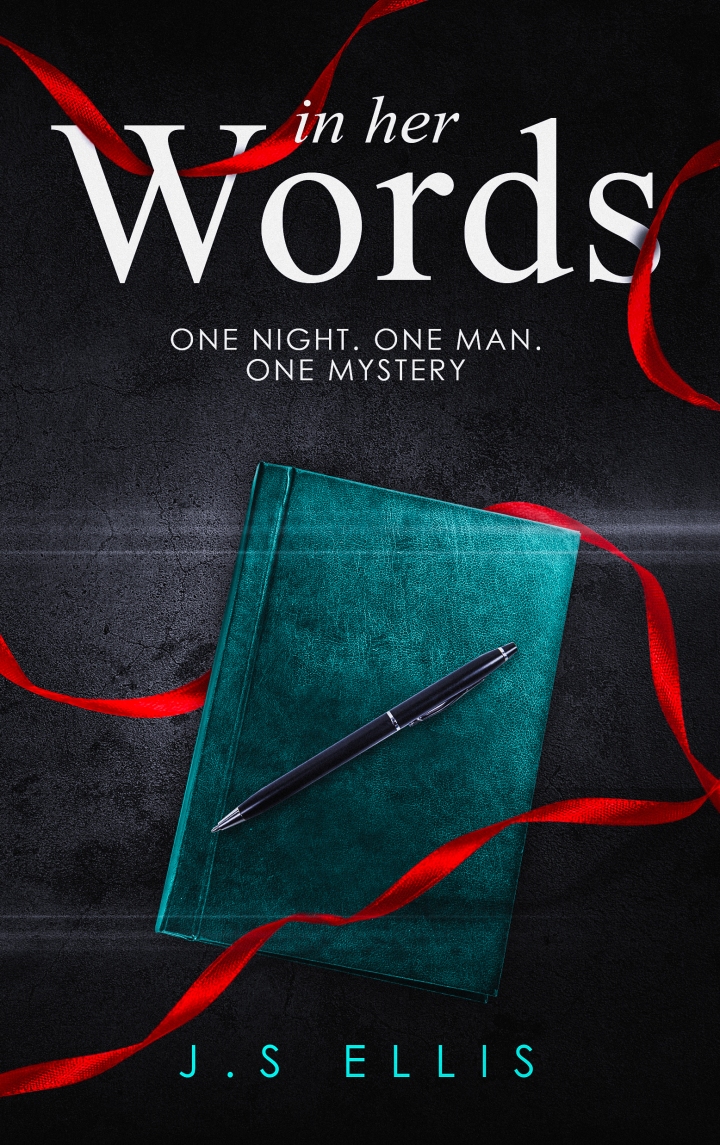
In Her Words cover (2)

Back of the Book…..

While she seems to have it all, Sophie Knight
is looking for more. When gorgeous and carefree Michael Frisk walks into her
life, he offers the excitement and passion she desires.

Sophie is willing to risk everything she has.
After all, she is used to concealing things from her husband—like her
alcoholism, her unhappiness. But soon she has more to hide. She wakes up one
morning in an alcoholic haze and finds bruises on her body, but has no recollection
of what happened to her. Was she raped?

When unsettling notes and mysterious phone
calls start, Sophie wonders whom she should turn to. Is Michael the cause of
the frightening things happening in her life, or is he the answer to her
problems?

Buy Link

https://amzn.to/2Jq3NXq

Author Info

J.S Ellis is a thriller author. She’s currently working on an adult Dystopian series called
the Chaperone. She’s also working on another thriller novel, for now, it’s called
Opium, as it’s still a wip.

J.S always liked to scribble from a young age but started writing by the age of sixteen.
She spent all this time, enhancing and learning about the craft. Writing is her
passion books are her obsession.

She has a degree in Creative Writing, English literature, and digital marketing. She
works in an accountancy firm. She lives in Malta with her fiancé. When she’s
not writing or reading, she’s either cooking, eating cheese, and chocolate, or
listening to good music and enjoying a glass of wine or two.